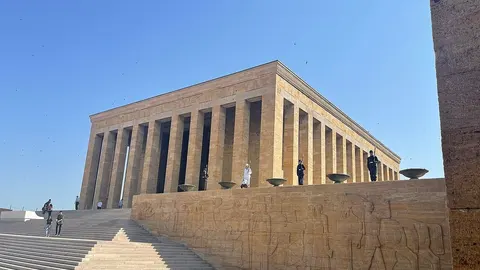
Choose a web design agency in Ankara by the website you need to operate after launch, not merely the homepage it can demonstrate during a sales call. Compare the content workflow, required integrations, ownership and support alongside the design. A visually impressive proposal can still be the wrong purchase when ordinary updates depend on expensive outside help.
Decide whether you need a website or a software project
A company presentation site, an online shop and a customer portal should not be quoted as though they differ only in page count. Start by describing the actions people must complete: find a service, request a quote, pay for a product or access a private record.
For a small professional business, a well-organised site with an editable service page and a reliable enquiry form may be enough. A manufacturer may need product families, downloadable documents and distributor enquiries. A retailer may need stock, payment and fulfilment workflows. These are examples for preparing a brief, not universal prescriptions.
Write down the essential tasks and the features that can wait. This prevents a proposal from accumulating attractive additions while leaving the core workflow unclear. A second phase can be sensible when it is genuinely optional rather than a way of postponing something the launch needs.
Also identify what already exists. You may have a domain, email service, product spreadsheet, photography or an older website with useful pages. A good discovery conversation should establish what can be reused before charging to replace everything.
Compare three different provider profiles
Libart Medya describes Ankara-based web design, ecommerce and custom software services. Its published contact address is on Cinnah Caddesi in Çankaya. It is a useful enquiry when the brief sits between a public-facing website and a more specialised workflow, but you should ask who will build and maintain the particular system proposed. [1] [2]
medyANKA publishes corporate website, ecommerce and enterprise-software offerings, alongside a portfolio of named projects. This gives you work to discuss during evaluation. Ask which elements the agency actually delivered and whether the demonstrated project is comparable in complexity to yours; a familiar client name alone is not evidence of the relevant technical experience. [3]
Ankasoft Medya advertises web design, WordPress solutions, ecommerce and custom development. That makes the platform decision an important question: will your project use an established content-management system, a packaged shop or a bespoke application, and why? The answer should relate to your operating needs rather than simply the provider's favourite technology. [4]
These examples are not a ranking by quality or value. Their published services establish what they offer, not how well a particular future project will be delivered. Request relevant references and a demonstration before treating any provider as the right partner.
Ask for a demonstration of tomorrow's ordinary work
Give each shortlisted agency the same three tasks. For example: add a service page, replace a photograph and process an enquiry. Ask it to show how your staff will do those tasks after launch, including the permissions they will have.
For an ecommerce brief, make the demonstration closer to reality. Change a product option, test an unavailable item and show what happens when an order is cancelled. A polished product page reveals little about the back-office work that will occupy your team every day.
For a bilingual site, request an edit in both languages. Check what happens when a page has no translation yet, whether each version can have appropriate text and images, and who is responsible for keeping the versions consistent. Google's documentation explains the importance of a clear structure for separate language versions; it is not a substitute for a usable editing process. [5]
Include Turkish names and characters in sample forms and content. Use real examples from your business rather than placeholder text alone. The aim is to find awkward workflows during the demonstration, when changing the scope is still straightforward.
Put the content responsibility into the quotation
A website can be technically ready while the launch remains blocked by missing text, product data or photographs. Specify who writes, translates, supplies, checks and uploads each type of content. Agree how many rounds of revision are included and what counts as a new requirement.
Ask for a content schedule that matches your team's availability. A deadline based on receiving all approved material immediately is not useful when the material does not yet exist. Conversely, the agency should explain what it can progress while approvals are pending.
For a catalogue, inspect the data before committing to an import price. Inconsistent product names, missing images and duplicate records can turn a seemingly simple upload into a separate cleaning project. Request an assessment of the actual file rather than a promise based only on the number of rows.
For photography and written material, record what usage rights your business receives. Do not assume that an attractive image in a design preview is automatically licensed for the finished commercial site. Clarifying the source and rights is part of an orderly handover.
Test the experience, not just the screenshots
Choose representative pages and test them on the devices your audience will use. Navigate without a mouse, complete the important form and read the content at a larger text size. W3C's preliminary accessibility guidance identifies useful first checks, while making clear that they are not a complete accessibility evaluation. [6]
Make the acceptance process concrete. The enquiry should reach the right destination; a confirmation should tell the visitor what happens next; a failed action should provide a useful explanation. A successful demonstration of the homepage does not prove those journeys work.
Ask how performance will be tested with the real images, scripts and integrations included. A nearly empty demonstration page is not the same as your finished catalogue or booking flow. Agree which issues must be resolved before launch and which will be tracked afterwards.
For an existing site, require a migration plan covering important addresses and content. Keep a record of what is being replaced and what must remain accessible. A redesign should not become an accidental deletion of information that customers still use.
Understand the recurring commitment
Separate the build price from hosting, maintenance, licences, content support and later development. Ask what happens when a paid component renews, when a software update causes a problem or when you need a small change outside the agreed scope.
Your business should control its domain and have a clear record of administrative access. For custom software, discuss source-code access, documentation and the practical process of moving to another supplier. This is a commercial handover question, not a claim that every contract grants identical rights.
Finally, define the support boundary. Who responds to a broken form? What is included in maintenance? How are urgent issues reported? Put those answers beside the design proposal when comparing the total purchase.
A good Ankara web-design partner will make the finished website manageable, not just attractive. Select the team that can demonstrate the workflows, explain the trade-offs and leave your business able to operate the result with confidence.