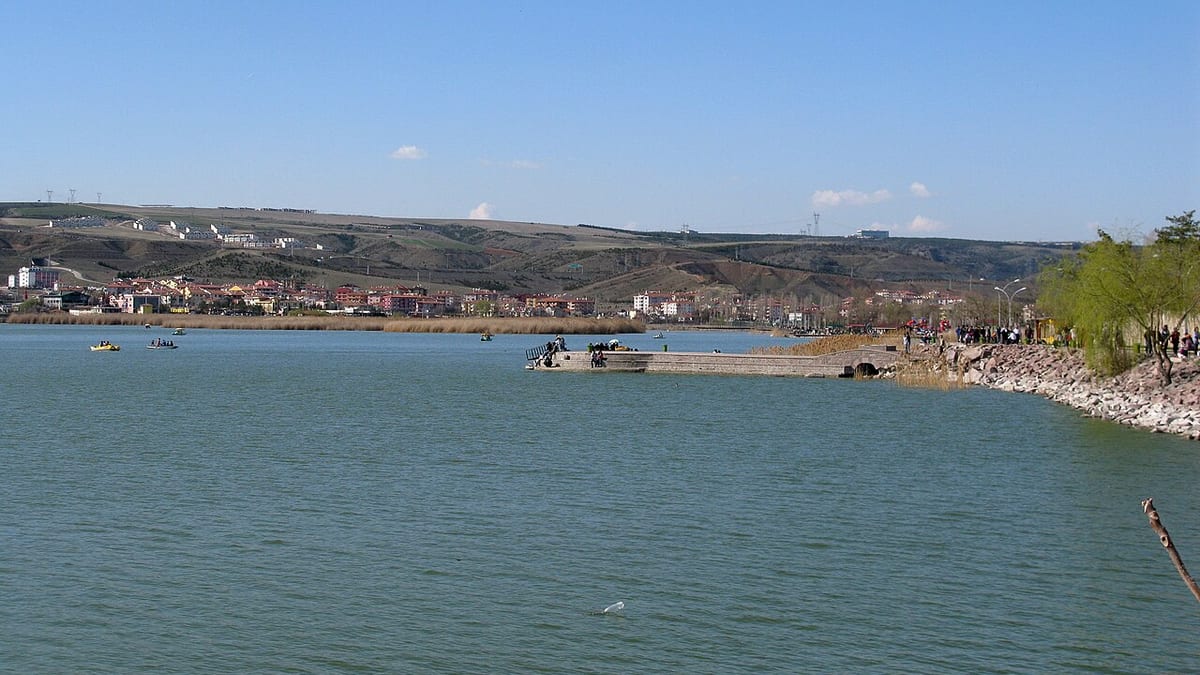
Eymir Lake works best as a deliberately paced walk or bicycle outing, not a drive-through sightseeing stop. Choose a full circuit only when everyone is comfortable with the distance; a shorter out-and-back can be equally rewarding. METU's current rules allow pedestrian access but restrict vehicle entry, so arrange your gate and return transport before setting off. [1]
Start with the distance, not the photograph
The Ministry of Education's outdoor-learning description identifies an approximately ten-kilometre perimeter road used for walking, running and cycling. Your actual distance will depend on the entry point, detours and whether you complete the entire circuit. Treat ten kilometres as a planning scale, not a precise measurement of every possible route. [2]
At an assumed walking speed of four kilometres per hour, ten kilometres requires two and a half hours of movement. That is a calculation, not an observed average, and it excludes a meal, photographs, rests and the walk to your transport. A leisurely circuit should not be squeezed into a two-hour gap between city appointments.
For an uncertain fitness level, start with an out-and-back. Agree on a turning time - perhaps after thirty or forty-five minutes of walking - then return by the same route. You retain the lake experience without discovering halfway around that the only way back is much farther than expected.
Cyclists should also choose a realistic outing. The ability to pedal a full circuit does not mean the group will enjoy doing it at the fastest possible pace. Leave time to stop, lock the bicycle where permitted and enjoy the setting rather than treating every bend as a training segment.
Vehicle restrictions are not a ban on walking
METU's rules, updated in April 2026, give pedestrian entry hours of 06:00–22:00. Vehicle access is a separate system involving authorised categories and entry cards, with additional restrictions during specified weekend periods. A person who can walk into the lake area does not necessarily have permission to drive a car through the gate. [1]
This distinction matters when booking a taxi. Ask to be taken to the agreed lake entrance, and do not assume the driver can continue to a restaurant or a chosen point on the circuit. A vehicle's commercial status does not, by itself, establish access permission.
The administrative rules also mean "limited traffic" is not the same as a completely car-free cycling course. Keep aware of authorised vehicles, walkers and other cyclists. Ride at a pace that allows room for people who may stop unexpectedly to look at the water.
Use the gate name or a specific entrance pin in your journey instructions. Eymir is managed by METU, but asking for the university's main campus is not an adequate substitute for naming the lake entrance. The university publishes lake-administration information separately. [3]
Build a route around daylight and a return point
For a morning visit, begin with the outdoor section you most want to complete, then decide whether to add a meal or an extra stretch. Reversing that order can leave the actual walk squeezed between a long lunch and the need to return to Ankara.
For an afternoon visit, calculate the turning time from sunset and your own comfort rather than from the latest permitted entry hour. An area being open until late does not promise lighting, an available bicycle rental, a staffed café or transport at every point along the shore.
Save the entrance and collection location before starting. When travelling as a group, agree where to meet if people split into walking and cycling parties. "At the lake" is too vague for a pickup after a circuit, especially when different members have used different gates.
Make the return a real arrangement rather than an assumption that another taxi will appear. A pre-agreed pickup time, a working phone and the contact details needed to change the plan provide more flexibility than simply extending the walk until everyone is tired.
Bring a suitable bicycle or verify the hire arrangement
This guide does not quote an unverified rental price or promise that a rental stand will be open on your date. Establish the bicycle source before travelling: your own equipment, a confirmed local hire or an organised outing with a clearly described bike included.
For a hire bicycle, check the fit, brakes and tyres before leaving the collection point. Ask what happens if there is a mechanical problem, where the bicycle must be returned and when the rental period ends. Those details matter more than choosing the lowest headline hourly price.
A helmet, a way to carry drinking water and clothing appropriate to the forecast are sensible preparations. Carry belongings so that they do not interfere with steering or make frequent stops awkward. For children, confirm the actual bicycle size and ability level rather than assuming that "family cycling" means every age is accommodated.
Walking is the better option when the available equipment is unsuitable or when the group mainly wants conversation and photographs. There is no need to rent a bicycle merely because a circuit appears in a cycling guide.
Protect the lake while enjoying it
The university prohibits swimming, walking on lake ice, camping, fires, barbecues, unauthorised drone flights and feeding birds. These are rules for the protected setting, not optional suggestions that become irrelevant when an area looks quiet. [1]
Use a permitted place for a picnic and remove the rubbish. Do not expand a shoreline stop into a campsite, leave food for wildlife or assume an empty patch of ground is suitable for a fire. The pleasure of the visit is the landscape itself; it does not need extra equipment that conflicts with its management.
For photographs, remain on appropriate routes and avoid approaching birds to provoke a better picture. A longer lens or a patient pause is preferable to disturbing a resting animal. Wildlife encounters should remain incidental, not a promised feature of the itinerary.
Decide how much of the day belongs here
For a first visit, I would choose either a half-day walking outing with a simple picnic or a bicycle circuit with a deliberately generous return buffer. Both are more coherent than trying to combine the lake, several city museums and another distant lakeside stop in one afternoon.
Do not confuse Eymir's access rules with those of another Ankara-area waterfront. A café reservation, a transport card or permission elsewhere does not automatically settle entry here. The responsible source for Eymir is the university's current visitor guidance. [3]
The most useful decision is the one made before arrival: are you here to complete a circuit, spend time outdoors with children, cycle at an easy pace or simply walk until you find a good place to pause? Match the route and transport to that answer. Eymir is more enjoyable when the journey supports your day rather than turning a relaxed walk into a deadline.